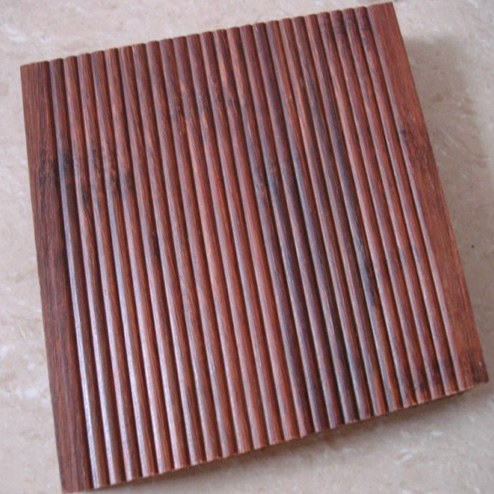
Sustainable bamboo facade cladding gives a building a warm, natural rainscreen while keeping the embodied carbon of the envelope low. Bamboo reaches usable maturity in 4–6 years and regenerates from the same root system, so the raw material is a genuinely renewable alternative to slow-grown hardwood cladding.
Why bamboo is a low-carbon cladding material
- Harvest cycle of 4–6 years instead of 40–80 years for hardwood.
- Bamboo sequesters carbon quickly and regenerates without replanting.
- Densification and thermal modification use heat and pressure rather than chemical preservatives.
How a ventilated bamboo rainscreen works
- Boards are fixed to vertical battens, leaving a 20–25 mm drained and ventilated cavity.
- The cavity lets the facade dry after rain and breaks the thermal bridge.
- A breather membrane behind the battens protects the structural wall.
- Boards are finished with an exterior oil or coating that can be re-applied on site.
Specification points
| Item | Recommendation |
|---|---|
| Material | Thermally modified, densified engineered bamboo |
| Board thickness | 10–20 mm |
| Fixing | Stainless steel, concealed clip or face screw |
| Cavity | 20–25 mm ventilated and drained |
| Maintenance | Clean annually, re-oil every 2–3 years |
Where bamboo cladding suits best
Entrance halls, commercial facades, hotel and resort elevations, cultural and retail buildings — anywhere a natural texture and a credible sustainability story matter. For high-rise or high-wind locations, fixing design and wind-load calculation should be confirmed with the project engineer.
View bamboo facade cladding panels or send your facade drawing for review.