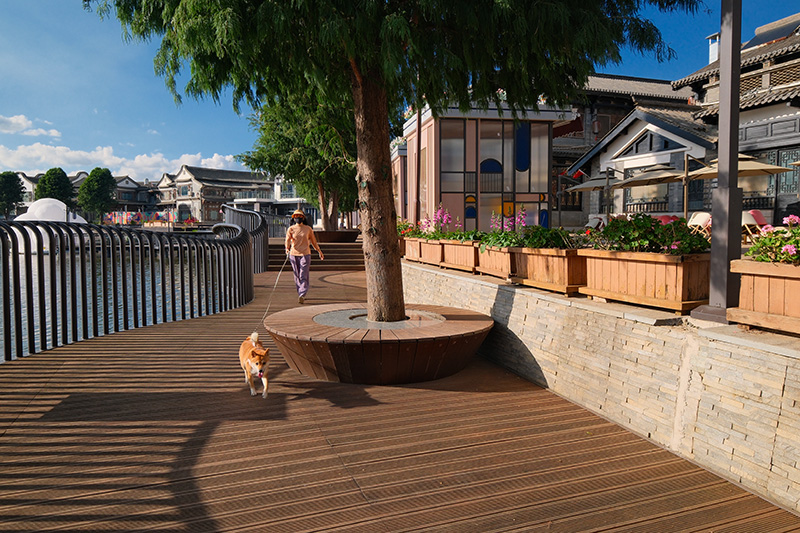
Walk through any new hotel terrace, waterfront boardwalk or residential development in Europe or North America and you will see the same shift: strand woven bamboo decking is replacing tropical hardwood and wood-plastic composite on projects where appearance, durability and sustainability all matter at once. For importers and distributors, understanding what drives this demand is the key to choosing the right supplier.
Outdoor living is a global growth market
The pandemic years changed how people use outdoor space. Terraces, balconies, pool surrounds and garden platforms became extensions of the living room, and that behaviour stuck. Europe – especially Germany, the Netherlands, the UK and the Nordics – now specifies decking for both new-build and renovation. North America keeps a strong demand in residential decks and hospitality, while Australia and the Middle East favour bamboo for pool and coastal projects. Across all these markets, buyers want one thing: a board that looks like hardwood but survives outdoors with less upkeep.
Why bamboo answers that demand
Strand woven bamboo is made by crushing bamboo fibres and pressing them under high pressure into a dense block. The result is a board with a hardness that rivals or exceeds many hardwoods, a warm grain that reads as natural timber, and far greater dimensional stability than a solid wood plank. For distributors, three arguments close sales:
- Durability story – high density and carbonization give resistance to indentation, moisture and surface decay.
- Sustainability story – bamboo regenerates in four to six years, not decades, and engineered panels use the whole culm.
- Design flexibility – consistent lengths, multiple tones and profiles that suit both modern and traditional architecture.
Compliance is now a buying criterion
In the European market, sustainability paperwork is no longer optional. EUDR due diligence and FSC chain-of-custody are asked for at tender stage, and importers who cannot document origin lose the order. Bamboo sourced from traceable plantations with certified chain-of-custody clears these checks more easily than uncertified tropical timber. See our EUDR checklist for bamboo importers and FSC bamboo for LEED and BREEAM for the detail buyers now expect.
What importers should ask a supplier
Not all strand woven boards are equal. Ask for the density test report from the actual batch, the moisture content at packing, the treatment cycle and the coating system – then confirm the supplier can hold the same source and colour across repeat orders. Import terms, duties and incoterms are covered in importing bamboo decking from China, and the product itself in our high-carbon densified outdoor bamboo decking range.
Frequently asked questions
Is strand woven bamboo decking popular in Europe?
Yes. Demand is strongest in Germany, the Netherlands, the UK and the Nordics, driven by outdoor living, renovation and sustainability requirements such as EUDR and FSC.
Why is bamboo decking replacing hardwood?
It delivers comparable or higher hardness, regenerates far faster than tropical hardwood, and offers more consistent lengths and lower maintenance – while documenting origin more easily.
Which markets buy the most bamboo decking?
Europe and North America lead in specification, with strong and growing demand in Australia and the Middle East for poolside and coastal projects.