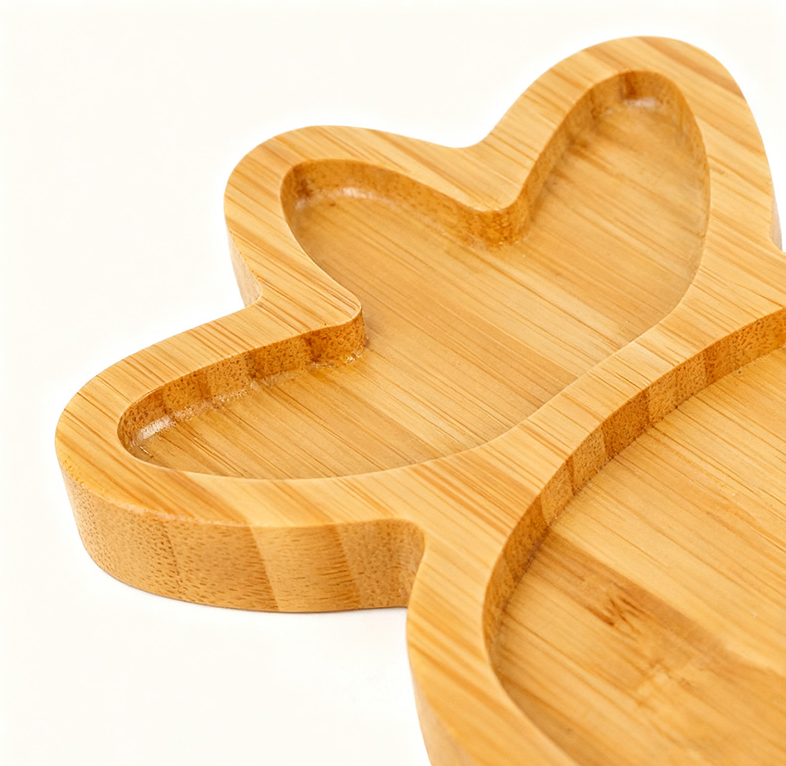
Bamboo tableware – plates, trays, cutting boards and reusable food items – has moved from health-food stores into mainstream hospitality and retail. It answers three pressures at once: the push to cut single-use plastic, the search for renewable alternatives to wood, and a regulatory environment that increasingly rewards materials with a clean origin story.
Where bamboo tableware is used
The product range is broader than most buyers expect:
- Food service and catering – reusable plates, serving trays and platters for restaurants and hotels.
- Home kitchens – cutting boards, serving trays and storage that are gentle on knives and easy to clean.
- Children and institutional use – light, durable plates and trays for schools and care settings.
- Retail and gift – attractively shaped, natural-looking items with a strong sustainability message.
Our reusable bamboo plates and bamboo cutting boards show the range from playful to practical.
Demand drivers: plastic replacement and wood substitution
Two substitution stories reinforce each other. Against single-use plastic, bamboo is renewable, biodegradable and reusable; against wood, it grows back in four to six years and avoids pressure on forests. For retailers and food-service groups with public sustainability commitments, that double narrative is easy to communicate and increasingly required in tenders. Bamboo’s exclusion from EUDR scope adds a practical edge over regulated wood items in European markets.
Carbon, circularity and the 2026 policy moment
Bamboo captures carbon quickly during growth, and production can use the culm efficiently with limited waste. That fits the direction of 2026 policy. The APEC meetings in Shenzhen in November placed green transformation among regional priorities, with the Shenzhen Initiative calling for green trade rules and resilient green supply chains; APEC’s forestry ministerial addressed forest resilience directly. In Europe, EUDR applies from 30 December 2026 for most operators, and while bamboo sits outside its scope, buyers are still asking for origin traceability and FSC chain-of-custody as proof of responsible sourcing.
What buyers should check
Ask about the food-contact finish and its certification, whether the item is designed for reuse or single service, and the supplier’s origin documentation. Reusable bamboo products should be hand-washed and dried thoroughly; they are durable but not dishwasher- or microwave-proof unless specified. For larger programmes, confirm consistent colour and shape across batches.
Frequently asked questions
Is bamboo tableware better than plastic?
Bamboo is renewable, biodegradable and reusable, so it avoids the persistence problem of single-use plastic – though it needs proper care to last.
Is bamboo tableware subject to EUDR?
Bamboo is excluded from EUDR’s product scope, giving it a clearance advantage over regulated wood items. Buyers may still request origin and FSC chain-of-custody records.
Why is bamboo tableware demand growing in 2026?
Plastic reduction targets, wood substitution, low-carbon procurement and APEC/EU green supply chain policies are all pushing demand in food service and retail.