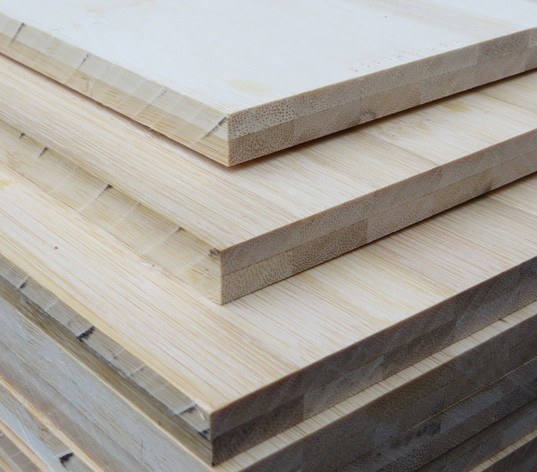
Bamboo board for furniture is a laminated panel made from pressed bamboo strips. It machines like a dense hardwood, holds a sharp edge, and gives a consistent grain across the whole batch — three reasons furniture factories use it for tabletops, frames, seating and cabinet interiors.
Grain direction matters
- Horizontal grain — strips laid flat, showing the wide face of the strip. Common for tabletops and panels.
- Vertical grain — strips on edge, giving a tight linear stripe. Popular for worktops and surfaces that will be re-sanded.
- Cross-laminated — alternating layers for maximum dimensional stability in large panels.
Choosing thickness and density
Thin boards (5–12 mm) suit cabinet backs, drawer bottoms and curved work. Mid thickness (15–30 mm) covers tabletops, doors and frames. Above 30 mm, even thick sections can be laminated to replace solid hardwood legs and frames. Higher density gives a harder surface but heavier panels and more tool wear.
Machining and finishing
- Use sharp, carbide-tipped tooling and moderate feed rates — bamboo is abrasive.
- Pre-drill for screws and dowels near panel edges.
- Sand progressively; the material takes oil, wax, lacquer and paint well.
- Seal all faces and edges equally to keep internal stress balanced.
Quality checks for a production run
| Check | What to look for |
|---|---|
| Colour consistency | Even tone across every board in the batch |
| Glue lines | Tight, no voids or glue bleed |
| Density / moisture | Within the agreed range, stated on the datasheet |
| Dimensions | Square, uniform thickness, consistent grain direction |
See bamboo laminated timber or ask for a furniture-board sample pack.