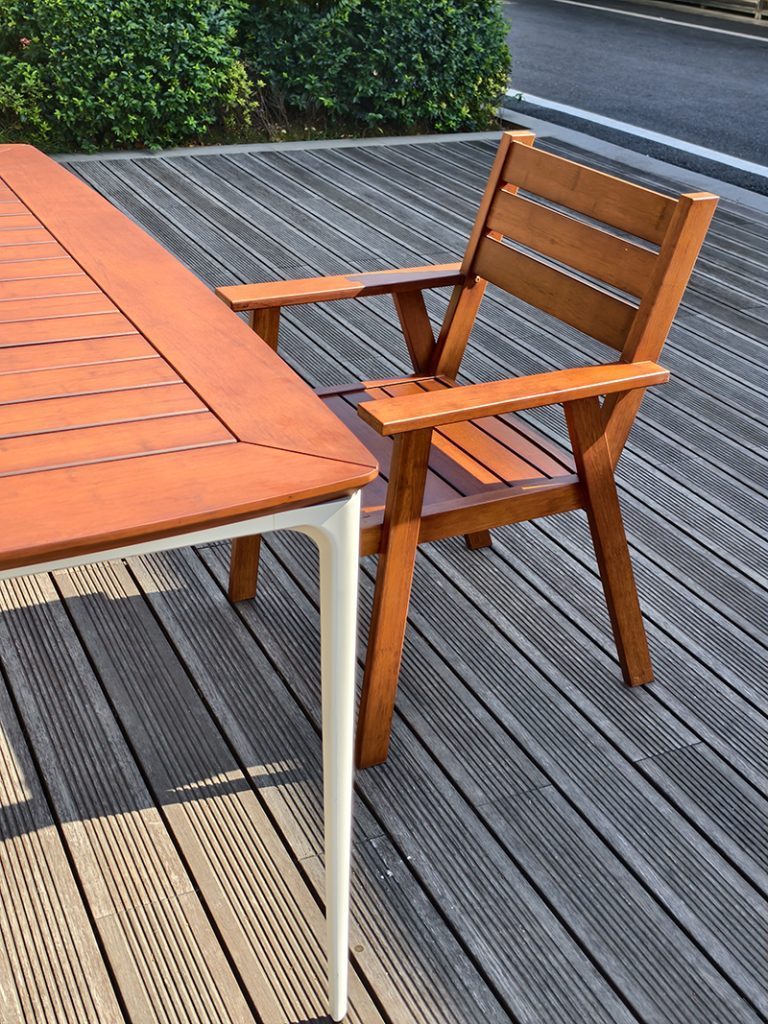
Walk into a hotel lobby, a modern office or a design showroom in Europe or North America and bamboo furniture is increasingly part of the story. What was once an eco niche has become a mainstream specification, driven by buyers who want warm, durable pieces that also make a credible sustainability claim.
Demand is broad and growing
The appeal crosses sectors. Hospitality groups specify bamboo table tops, lounge seating and reception counters for their look and durability. Offices and schools choose it for contract furniture that must withstand heavy use. Household buyers pick compact, light pieces for apartments. Across these segments, the same message resonates: furniture made from a grass that regenerates in four to six years, not a tree that takes decades.
Why bamboo is winning over wood
Bamboo furniture offers hardness comparable to or better than many hardwoods, a clean knot-free grain, and less movement with humidity changes. It is also light, which lowers shipping cost and eases installation. But the decisive factor in 2026 is regulatory: as the EUDR approaches its 30 December 2026 application date, bamboo sits outside the regulation’s scope while many wood-based furniture lines face geolocation and due-diligence demands. For importers, that is a real clearance advantage – though not a licence to skip paperwork, since EU buyers still ask for origin data and FSC chain-of-custody.
Carbon neutrality and the policy backdrop
Bamboo’s fast growth cycle and whole-culm use give it a strong embodied-carbon story. That aligns with the policy direction of 2026. The APEC Leaders’ Meeting in Shenzhen in November put green transformation among its cooperation priorities, and the Shenzhen Initiative called for green trade rules and stable, resilient green supply chains. APEC’s forestry ministerial focused on forest resilience – precisely the agenda that fast-growing, non-deforesting bamboo fits. For buyers building a low-carbon product line, this is a tailwind, not a passing trend.
What importers should verify
Ask about the panel or strand source, the adhesive and finish (low-emission finishes matter indoors), the hardness test report, and FSC chain-of-custody. Be wary of any seller offering a so-called “EUDR certificate” – the regulation places the due-diligence duty on the EU operator, and no transferable certificate exists. Suppliers who can hand over clean origin records simply make the importer’s job easier.
Frequently asked questions
Is bamboo furniture in demand in Europe and North America?
Yes. Hospitality, contract and household segments all show growth, driven by durability, aesthetics and sustainability requirements in procurement.
Does bamboo furniture help with EUDR compliance?
Bamboo is outside the EUDR product scope, which eases clearance versus regulated hardwood. Importers should still keep origin and FSC chain-of-custody records, as EU buyers routinely request them.
Is bamboo furniture a low-carbon choice?
Bamboo sequesters carbon quickly and regenerates after harvest, giving it a low embodied-carbon profile compared with slow-grown timber and many alternatives.