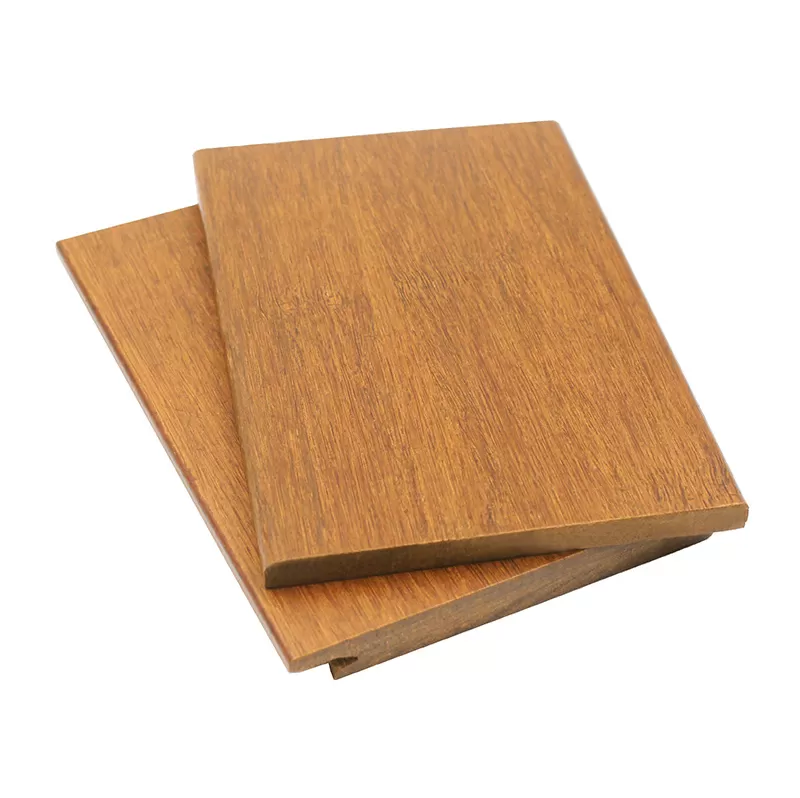
Bamboo cladding fails for one reason more than any other: trapped moisture behind the boards. The fix is not a better coating — it is a properly ventilated rainscreen. Get the cavity right and the cladding will dry after rain, stay flat and keep its colour far longer.
The rainscreen principle
The cladding is the outer skin. Behind it sits a drained and ventilated cavity, then the battens, then the weather barrier and the structure. Water that gets past the boards — through joints, around openings or driven by wind — must be able to drain down and dry out. If the cavity is blocked, that water sits against the board’s back face, which is the one surface nobody ever coats.
Cavity depth and battens
- Cavity — 25 mm minimum, measured from the back of the board to the face of the weather barrier.
- Batten spacing — 400–600 mm, with the tighter spacing for horizontal boards and exposed locations.
- Battens — aluminium, durable hardwood or treated batten; vertical battens for horizontal cladding, and the reverse for vertical boards.
- Fixings — stainless steel, screwed through the batten into the structure, never into the insulation alone.
Openings at top and bottom
Ventilation needs an inlet and an outlet. Provide a continuous opening at the base (often 10–25 mm) and at the top of each storey, with insect mesh to stop birds and insects. Do not close the head with a solid trim that seals the cavity — that single detail converts a rainscreen into a trap.
Horizontal or vertical?
Horizontal boards shed water well and are the classic look, but they need more careful detailing at joints because water runs along the board face. Vertical boards drain faster but can stain below joints. In both cases, keep the boards off the ground by at least 150 mm and protect the top edge with a drip detail.
Fixings and movement
- Pre-drill near board ends on dense bamboo.
- Use slotted or oversized holes where the board must move.
- Leave a small gap at board ends rather than butting tight.
- Keep fixings at least 20 mm from the board edge.
Around openings and corners
Windows, doors and corners are where water gets in. Use flashings above openings, end stops at corners, and keep the cavity continuous around the building. Never interrupt the cavity at a corner without providing an alternative drainage path.
Common failures and their causes
- Dark staining on the back face — no ventilation, condensation trapped in the cavity.
- Cupping — boards fixed too tight, or battens too far apart.
- Rust streaks — carbon steel fixings.
- Premature colour loss — no UV-stable coating and full southern exposure.
Frequently asked questions
Do I need a membrane behind bamboo cladding?
Yes. A weather-resistive barrier is part of the assembly; the cladding is not the waterproof layer.
Can bamboo cladding be installed directly on masonry?
Only with battens creating a drained cavity. Direct fixing traps moisture and is the fastest route to staining.
How often should the coating be renewed?
Typically every 3–5 years for exterior bamboo, depending on exposure. A recoat before the surface looks dry is cheaper than a full sand and refinish.
Our light-carbon and high-carbon outdoor ranges include cladding profiles with matching trims and fixings. Send the elevation and exposure direction and we will confirm batten layout — contact us.