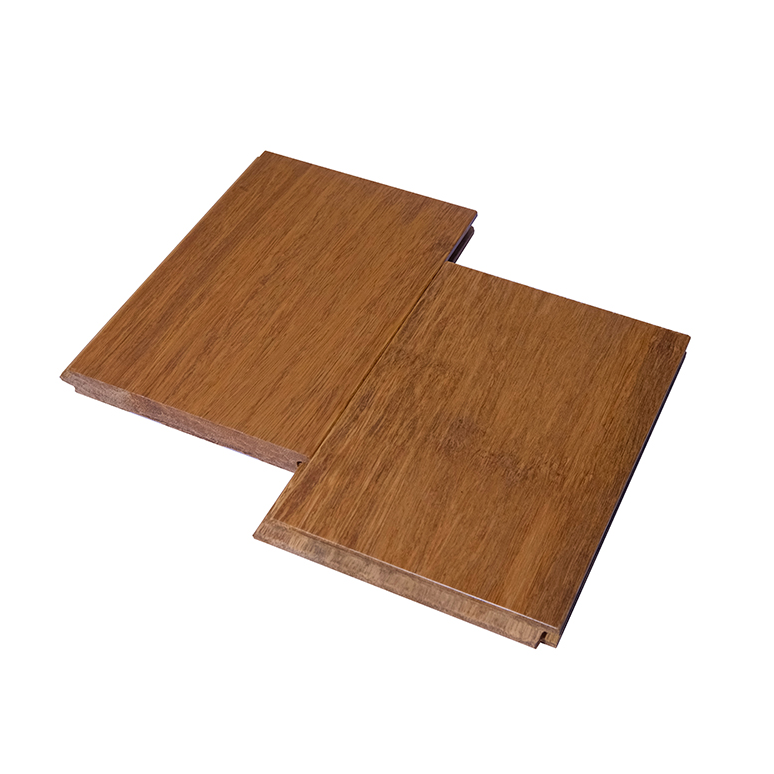
Almost every engineered bamboo product comes in two families: natural and carbonized. The difference is not a stain or a lacquer — it is a heat treatment applied before pressing, and it changes the material, not just its colour.
What carbonization actually does
Bamboo strips or strands are steamed at elevated temperature in a pressure vessel. The heat caramelises the sugars inside the fibre, which darkens the material from pale straw to a honey or coffee tone and reduces the starch that mould and insects feed on. Nothing is added; the colour is the result of the reaction inside the cell walls.
Because it is a thermal process, the result is consistent through the thickness of the board. Sand it and the colour stays — unlike a stained product, where sanding exposes a different tone underneath.
Colour and appearance
- Natural — pale, light honey, close to maple or ash. Shows grain and node marks clearly.
- Carbonized — medium to dark caramel, closer to walnut or teak. Hides minor variations and looks warmer in large areas.
- Deep carbonized / double carbonized — darker still, with slightly reduced strength because more of the fibre has been heat-modified.
Durability: which one wins?
It depends on the threat.
- Mould and insects — carbonized material has less available starch, so it resists both better in humid conditions.
- Mechanical strength — natural bamboo keeps slightly higher bending strength. Aggressive carbonization trades a little strength for colour and biological resistance.
- Dimensional stability — broadly similar once the board is pressed and dried to the correct moisture content; density and adhesive matter more than colour.
For exterior decking and cladding, the specification should be driven by the treatment class and density, not by whether the board is light or dark.
Cost
Carbonized boards usually carry a small premium — typically a few percent — because the process adds energy and handling time and because darker material shows handling marks, so yields are lower. On large projects the difference is rarely the deciding factor; colour consistency between batches usually is.
How to choose
- Interior floors and furniture — pick by design intent. Both perform well; carbonized hides wear better.
- Humid or coastal interiors — carbonized is the safer default.
- Structural or load-bearing use — specify by tested strength, and ask whether the grade is natural or carbonized.
- Exterior — ignore colour as a proxy for durability and specify the actual treatment and coating system.
Frequently asked questions
Does carbonized bamboo fade?
Indoors, colour is stable under normal light. In direct sun, any bamboo will gradually lighten over years, carbonized more visibly than natural. UV-stable finishes slow this down.
Is carbonized bamboo stronger?
No — it is slightly less strong in bending, but more resistant to mould and insects. Strength and biological durability are different properties and should be specified separately.
Can I mix natural and carbonized boards in one project?
Yes, it is a common design device for stripes and borders. Order all material in one production batch so the tones sit together.
Both finishes are available across our bamboo decorative panels and outdoor anti-corrosion bamboo ranges. Tell us the colour direction and the exposure, and we will send samples from the same batch — contact us here.