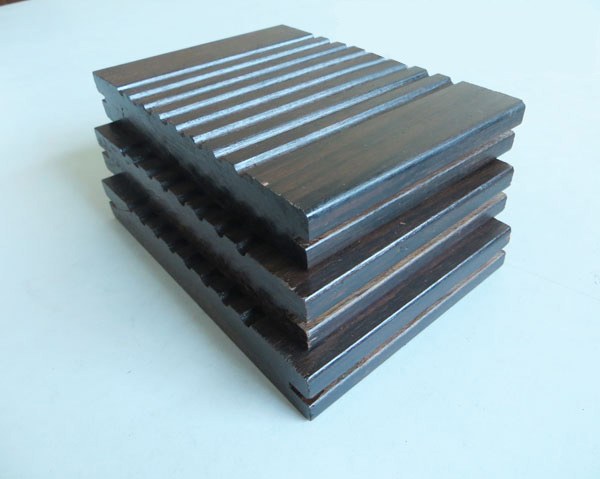
Outdoor bamboo decking is made from thermally modified, high-density densified bamboo. The heat treatment and pressing remove much of the starch and raise the density, so the finished board resists humidity movement, mould and termite attack far better than untreated bamboo.
Why bamboo decking performs outdoors
- Density of 1150–1250 kg/m³ — hard, wear resistant and quiet underfoot.
- Low moisture movement compared with many hardwoods, so boards stay flat.
- Thermal modification removes sugars, reducing mould and insect risk.
- Consistent colour and grain along the whole run, without knots or sap pockets.
Choosing the surface profile
Grooved (ripple, wave or small-groove) surfaces hide minor movement and add grip in wet weather — the usual choice for pool decks, terraces and public walkways. Smooth surfaces suit covered balconies and boardwalks where cleaning is easy. Anti-slip treatments are available where the project demands it.
Installation essentials
- Substructure — aluminium, steel or bamboo joists at 300–400 mm centres, on a slope of about 1% for drainage.
- Ventilation — leave a 15–20 mm air gap and never lay boards directly on concrete or soil.
- Fixing — stainless steel clips or screws; pre-drill near board ends to avoid splitting.
- Expansion — leave a 5–8 mm gap at walls and between board ends.
Maintenance
Brush the surface regularly, avoid standing water, and re-oil with a hard-wax or penetrating exterior oil every 12–24 months depending on exposure. A well maintained bamboo deck keeps its colour and stability for many seasons.
Explore structural bamboo components or request decking samples and pricing.