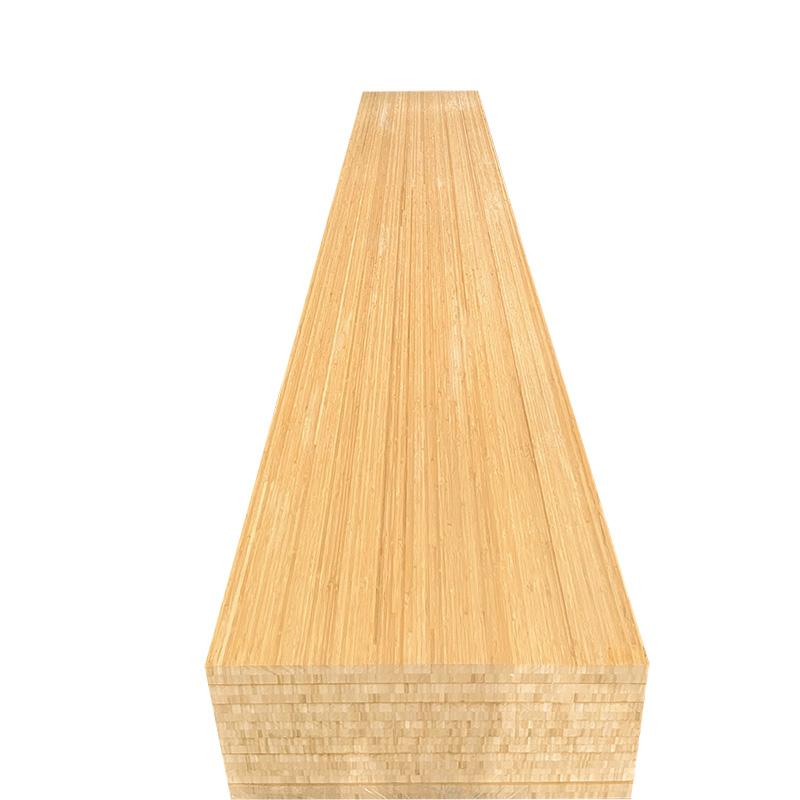
Bamboo plywood has quietly become one of the most versatile engineered bamboo products. Built by bonding bamboo strips or veneers into large, flat panels, it delivers the workability of plywood with the renewable credentials of a grass that matures in four to six years. As manufacturers and importers look for wood alternatives that clear tightening green trade rules, demand is rising across Europe, North America and Asia-Pacific.
Where bamboo plywood is used
The panel’s consistency and workability open a wide range of applications:
- Furniture and cabinetry – carcasses, tabletops, shelving and flat-pack components where stable, knot-free panels matter.
- Interior wall and ceiling lining – large-format sheets for clean architectural surfaces.
- Packaging and transport – container flooring and industrial panels that must take heavy loads.
- Educational and contract furniture – school desks, laboratory tops and office fit-outs.
Our bamboo plywood indoor wall panels show the material’s finishing range; the engineering basis is explained in what strand woven bamboo is and why density matters.
Why demand is growing
Three forces are converging. First, substituting for wood: buyers want a panel that looks and machines like hardwood but comes from a fast-regenerating source. Second, certification and regulation: as the EU Deforestation Regulation (EUDR) moves toward its application date of 30 December 2026, bamboo’s exclusion from the regulation’s scope gives it a clearance advantage over tropical hardwood. Third, green procurement: the 2026 APEC meetings in Shenzhen placed green transformation firmly on the regional agenda, with the Shenzhen Initiative calling for green trade rules and resilient green supply chains.
Carbon and the circular story
Bamboo sequesters carbon rapidly during its short growth cycle, and engineered panels use the whole culm with little waste. For specifiers tracking embodied carbon, that is a measurable advantage over slow-grown timber. Buyers increasingly ask for life-cycle data and carbon-footprint evidence, so suppliers who can document chain-of-custody through FSC will be better placed. The framework for that is covered in FSC bamboo for LEED and BREEAM projects.
Outlook and what buyers should check
The outlook is positive but not without conditions. Green trade rules are broadening – the EU carbon border mechanism is already in its taxation phase and may widen by 2028 – so today’s regulatory advantage should be backed by real documentation, not assumed. Ask suppliers for panel density, glue type and emissions class, moisture content at packing, and FSC chain-of-custody. Consistent colour across batches matters on large furniture runs.
Frequently asked questions
Is bamboo plywood a good replacement for wood plywood?
Yes. It machines like conventional plywood, is knot-free and dimensionally stable, and comes from a source that regenerates in four to six years rather than decades.
Is bamboo plywood covered by EUDR?
Bamboo is excluded from the EUDR product scope, which gives it a clearance advantage over regulated hardwood. Downstream buyers may still request origin and FSC chain-of-custody documents, so keep records ready.
What drives bamboo plywood demand in 2026?
Wood substitution, green procurement, EUDR-driven sourcing shifts and APEC’s green supply chain agenda are the main demand drivers across furniture, interior and packaging markets.