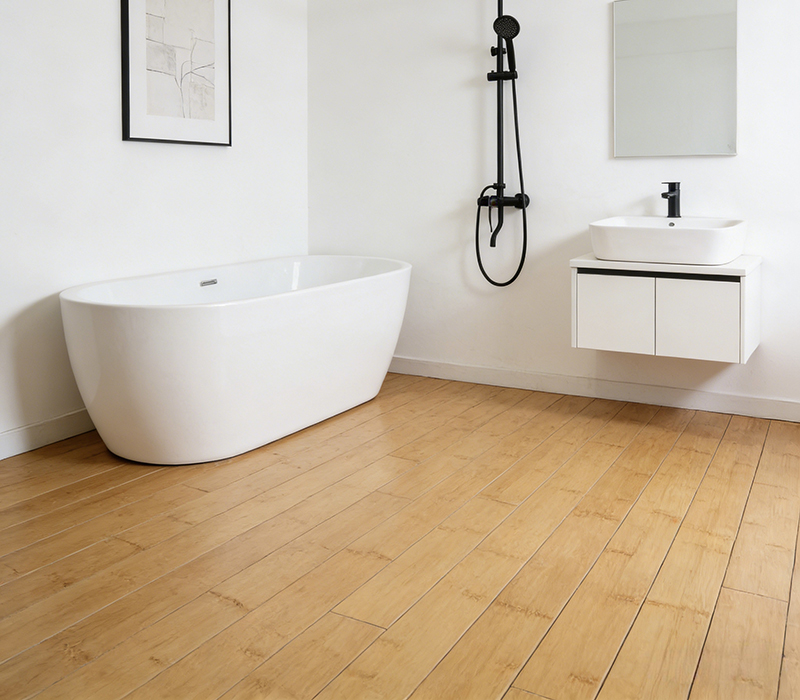
Indoor bamboo flooring has moved from niche product to mainstream specification. Architects, builders and homeowners in Europe, North America and across Asia increasingly choose it where they previously chose oak or maple – drawn by a warm, clean look, a harder-wearing surface and a much stronger sustainability story.
Demand is driven by three things
First, appearance: bamboo’s fine linear grain suits the light, minimal interiors popular in modern housing and hospitality. Second, performance: engineered bamboo floors deliver high hardness and resist the dents that show quickly on softer woods. Third, sustainability: bamboo is a grass that regenerates in four to six years, and engineered boards use the whole culm rather than only the slow-grown trunk of a tree. For markets with green building rating systems, that combination is hard to ignore – the certification angle is covered in FSC bamboo for LEED and BREEAM projects.
How bamboo compares with wood flooring
- Hardness – quality strand woven bamboo reaches hardness levels above most common hardwoods, so it dents less under furniture and traffic.
- Stability – engineered bamboo moves less with humidity changes than solid wood, reducing gaps and cupping in seasonal climates.
- Sustainability – a four-to-six-year harvest cycle versus decades for hardwood, with certified chain-of-custody available.
- Installation – consistent plank dimensions and click or glue-down systems make fitting straightforward for contractors.
- Cost – often better value than premium hardwood once durability and replacement cycles are considered.
Natural or carbonized, and where to use it
Natural bamboo keeps a pale, neutral tone ideal for Scandinavian and contemporary interiors; carbonized bamboo offers a deeper caramel colour with slightly modified performance. The trade-offs are set out in carbonized vs natural bamboo. For wet areas such as bathrooms and kitchens, specify a waterproof-grade product – our densified interior bamboo flooring is designed for exactly these conditions, and the product range also includes vertical solid bamboo flooring.
What buyers should verify
Ask for the hardness test report, the moisture content at packing, the coating system and the warranty terms. Confirm the finish suits the traffic level – a matte wear layer hides scratches better in busy households, while a high-gloss finish suits low-traffic formal rooms. Consistent colour between batches matters on large projects, so request retained samples.
Frequently asked questions
Is bamboo flooring harder than oak?
Quality strand woven bamboo typically reaches higher hardness ratings than common oak, so it resists dents and wear better under furniture and heavy traffic.
Is bamboo flooring sustainable?
Yes. Bamboo matures in four to six years, regenerates after harvest and uses the whole culm – look for FSC chain-of-custody documentation to prove it.
Can bamboo flooring be installed in kitchens and bathrooms?
Standard boards should stay in dry rooms; for wet areas choose a waterproof-grade densified bamboo product with sealed joints.