Wall systems are judged on more than appearance. A building material has to carry load or hold its shape, resist fire and moisture, install predictably and justify its environmental cost. Bamboo wall panels increasingly pass all of these tests at once, which is why they appear on more and more architectural specifications – from hotel facades to hospital interiors. This article looks at the material advantages first, then where they translate into real applications.
Advantage 1: an exceptional strength-to-weight ratio
Bamboo’s fibres run longitudinally along the culm, and engineered panels preserve that alignment. The result is a material that is strong along its length yet surprisingly light. Strand-woven panels can reach densities above 1,100 kg/m3 with hardness comparable to or better than many hardwoods, while weighing far less than an equivalent masonry or cement board wall. Lower weight means lighter substructures, easier handling on site and less seismic load – all valuable in retrofit and high-rise work.
Advantage 2: dimensional stability
Timber moves with humidity; bamboo panels move less. The controlled drying, resin bonding and pressing used in engineered bamboo produce a board with low and predictable moisture movement. In practice that means fewer gaps, less cupping and less call-back in buildings that cycle between humid summers and dry, heated winters. The fire and stability testing that specifiers ask about is covered in fire performance of engineered bamboo.
Advantage 3: fire and moisture behaviour
Carbonization reduces the starch and sugars that feed decay, and quality panels are supplied with documented reaction-to-fire classifications for the finished assembly. Exterior grades are installed as ventilated rain-screen systems so the wall can dry after rain. Combined, these properties let bamboo panels serve both internal fit-outs and exposed facades – the detailing is explained in bamboo wall cladding ventilation and sustainable bamboo facade cladding.
Advantage 4: acoustics and interior comfort
Slatted and grooved bamboo panels diffuse sound rather than reflecting it, improving speech clarity in lobbies, classrooms and open offices. Behind the slats, an absorbent backer can be added for a measured acoustic rating. The same geometry that makes a wall look rhythmic also makes it quieter – a double benefit that flat gypsum boards cannot offer.
Advantage 5: fast, clean installation
Panels arrive in consistent, large-format sheets or profiled boards with tongue-and-groove or hidden-clip fixing. They can be cut with standard woodworking tools, fixed over existing substrates and installed without wet trades. On refurbishment projects that shortens programmes and reduces disruption – a practical advantage that often decides the specification.
Advantage 6: low embodied carbon and certification
Bamboo matures in four to six years and regenerates after harvest, so it sequesters carbon on a much faster cycle than hardwood. Engineered panels use the whole culm. With FSC chain-of-custody and EUDR documentation available, the sustainability claim can be verified rather than assumed – see FSC bamboo for LEED and BREEAM.
Where these advantages translate into applications
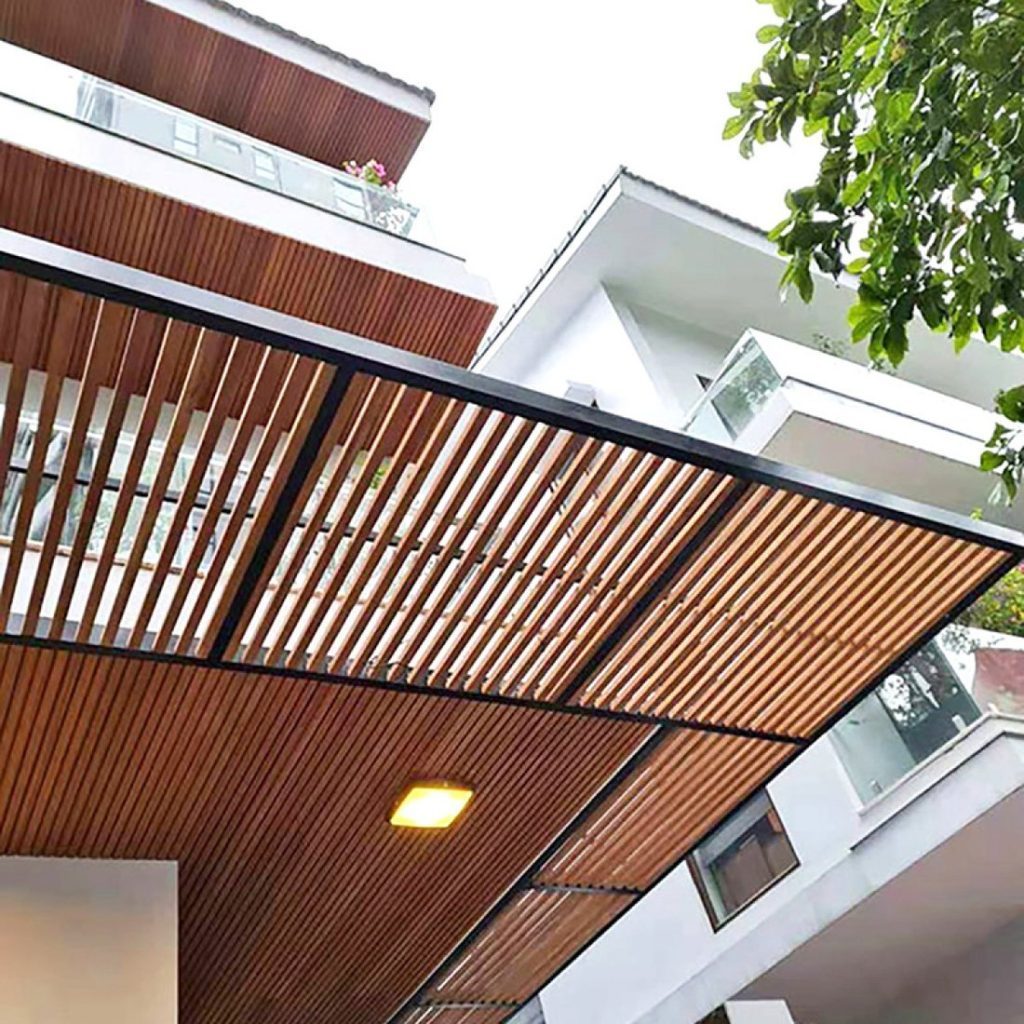
- Exterior facades and rain-screens – light, stable and weather-tolerant, as in the villa facade shown in our cover image.
- Hotel, office and hospital interiors – warm, durable and acoustically useful in corridors and feature walls.
- Retail and exhibition spaces – large-format panels for fast fit-out with a distinctive grain.
- Educational and public buildings – fire-rated, low-maintenance walls that withstand heavy traffic.
To compare panel formats and finishes for your project, browse our bamboo wall panel collection; for the engineering basics see engineered bamboo wall panels explained.
Frequently asked questions
Is bamboo a good building material for walls?
Yes. Engineered bamboo wall panels offer a high strength-to-weight ratio, low moisture movement, documented fire ratings and fast installation, making them suitable for both interiors and ventilated facades.
Are bamboo wall panels stronger than wood?
Strand-woven bamboo reaches hardness levels above many hardwoods while staying lighter than masonry or cement board – a strong combination where weight and durability both matter.
Do bamboo wall panels reduce construction time?
They install dry, over existing substrates, with standard tools and hidden clips or tongue-and-groove systems, which shortens programmes and cuts disruption on refurbishment projects.